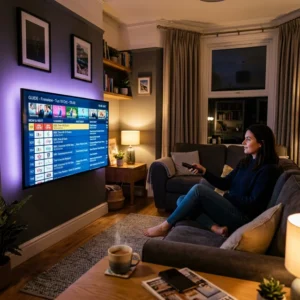
For decades, satellite television was the premium choice for UK households wanting access to sport, movies, and international channels. But the rise of internet-based streaming has shifted the landscape dramatically.
The IPTV vs satellite TV comparison now favours IPTV on almost every metric that matters to modern viewers. You might also be interested in our guide on IPTV vs Cable TV: 9 Reasons Millions Are Making the Switch.
You might also be interested in our guide on Cord Cutting UK: How to Ditch Cable and Save £800+ Per Year.
This guide breaks down the key differences between the two technologies, helping you decide whether to stick with your satellite dish or make the switch to streaming. Completely new?
Read our IPTV beginner guide. You might also be interested in our guide on Best VPN for IPTV: 5 Tested Providers That Actually Work in 2025.
Quick Comparison
| Factor | IPTV | Satellite TV |
|---|---|---|
| Monthly Cost | £8 – £15 | £40 – £100+ |
| Installation | Self-install, 10 min | Dish install, engineer visit |
| Equipment | Firestick (~£65) | Dish + box (£50–£200+) |
| Channels | 3,000 – 10,000+ | 200 – 400 |
| Contract | Rolling monthly | 12–18 months |
| Weather Affected | No | Yes (rain fade) |
| Internet Required | Yes | No |
| Portability | Watch on any device, anywhere | Home TV only |
| 4K Content | Widely included | Limited, premium tiers |
Key Takeaways: Iptv vs satellite tv
- Iptv vs satellite tv offers UK viewers a modern alternative to traditional broadcasting with thousands of channels available on-demand.
- Always research providers thoroughly and read genuine user reviews before committing to any subscription.
- A stable broadband connection of at least 25 Mbps is recommended for the best streaming experience.
- Make sure to test any service with a free trial or short-term plan before signing up long-term.
Table of Contents
- Cost Comparison
- Installation and Equipment
- Channel Availability
- Weather and Reliability
- Device Flexibility
- Picture Quality
- On-Demand Content
- Portability
- Frequently Asked Questions
- Conclusion
1. Cost Comparison
The price gap between IPTV vs satellite TV is significant.
Satellite TV costs (Sky UK example):
- Sky Entertainment: £26/month
- Add Sky Sports: +£25/month
- Add Sky Cinema: +£12/month
- Sky Q box rental: included but locked to contract
- Total typical bundle: £50–£100+/month on 18-month contract
IPTV costs:
- Full package (all channels): £8–£15/month
- No additional charges for sports or cinema
- No equipment rental fees
- No contract commitment
Over 12 months, a typical satellite viewer paying £80/month spends £960. An IPTV subscriber paying £12/month spends £144. That is a saving of over £800 per year.
Check our UK pricing guide for detailed cost breakdowns.
2. Installation and Equipment
Satellite installation requires a professional engineer to mount a dish on your property, run cables through walls, and install a set-top box. Planning permission may be needed for certain building types. The wait time for an installation appointment is typically 1–2 weeks.
IPTV installation means plugging a streaming device into your TV’s HDMI port, downloading an app, and entering login details. Total time: approximately 10 minutes.
Equipment Requirements
- Satellite: External dish, LNB, coaxial cabling, set-top box, remote control
- IPTV: Amazon Firestick (£40–£65) or your existing Smart TV
The satellite setup is more complex, more expensive, and requires permanent modifications to your property. IPTV requires nothing more than a small streaming device connected to your existing TV.
3. Channel Availability
Satellite TV in the UK is dominated by Sky, which packages channels into restrictive tiers. You pay separately for entertainment, sports, cinema, and kids packages. Freesat offers free-to-air satellite channels but lacks premium content.
IPTV providers typically include all channels in a single flat-fee package: all UK Freeview channels, all Sky Sports and Cinema channels, TNT Sports, international channels, and premium US networks.
When considering iptv vs satellite tv, There are no tiers, no add-ons, and no upselling.
The total channel count is another differentiator. Satellite packages max out around 300–400 channels. IPTV providers routinely offer 3,000 to 10,000+ channels spanning dozens of countries and languages.
4. Weather and Reliability
This is one area where IPTV vs satellite TV produces a nuanced answer.
Satellite TV reliability:
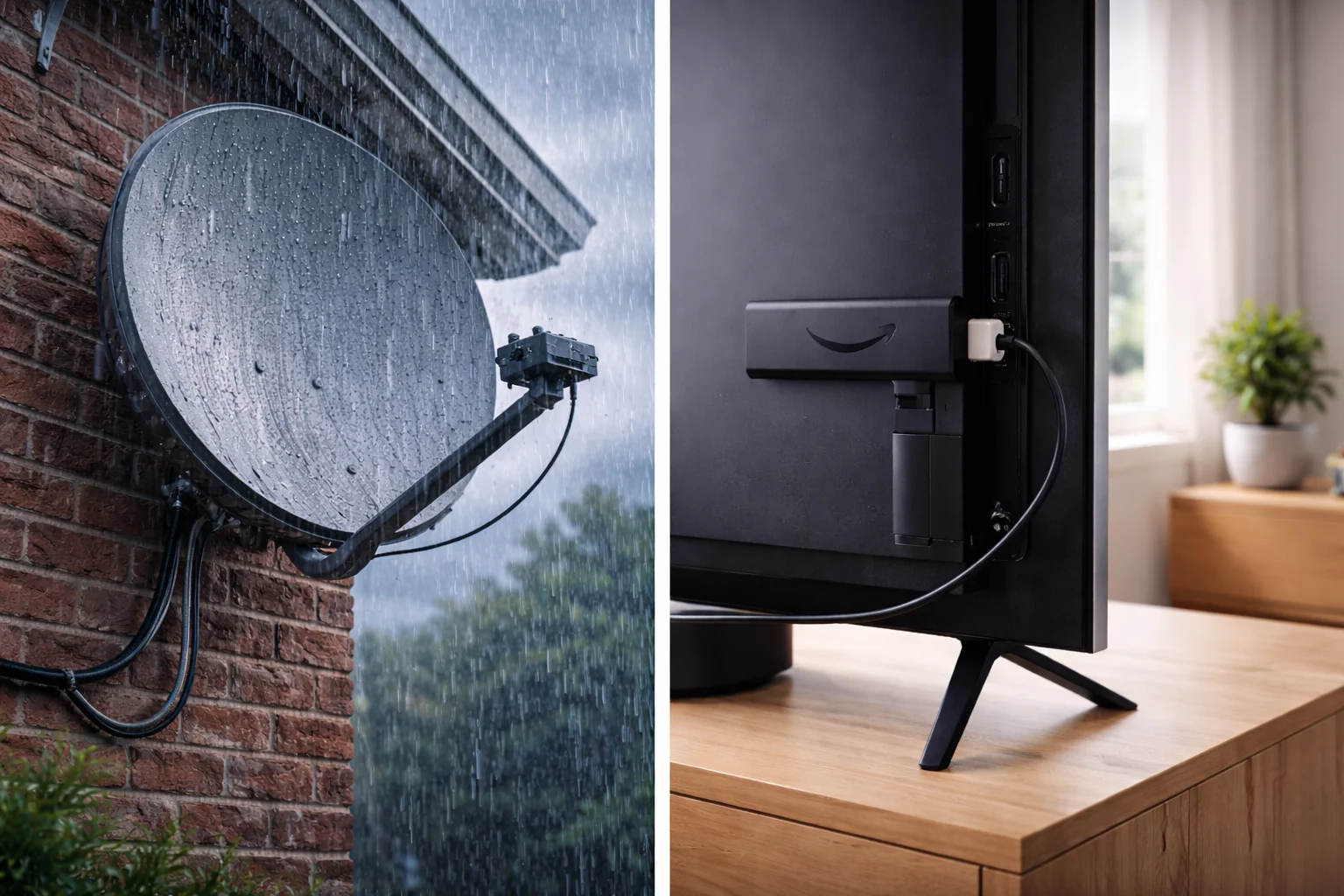
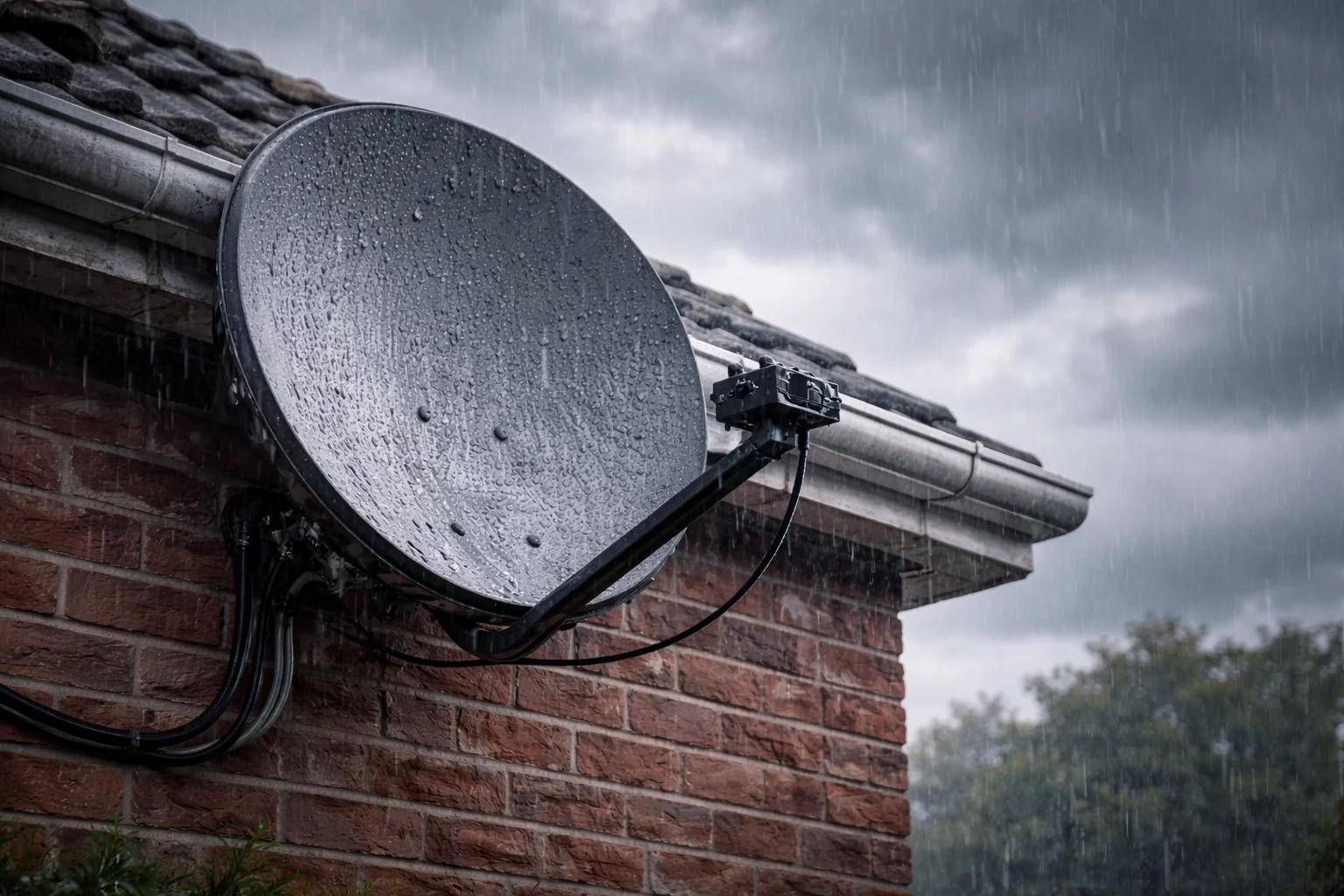
- Signal can degrade or drop completely during heavy rain, snow, or strong winds (known as “rain fade”)
- Dish alignment can shift over time, requiring adjustment
- Once installed and aligned, works independently of internet
- No dependency on broadband provider
IPTV reliability:
- Unaffected by weather conditions
- Dependent on internet connection stability and speed
- ISP throttling can cause buffering (solved with a VPN)
- Provider server quality directly impacts stream stability
Both have reliability trade-offs. If you live in an area with poor broadband but clear sky exposure, satellite may be more reliable.
For most UK households with standard broadband (25+ Mbps), IPTV delivers consistent performance regardless of weather.
5. Device Flexibility
Satellite television is tied to the set-top box connected to one TV. Multi-room setups require additional boxes and monthly fees.
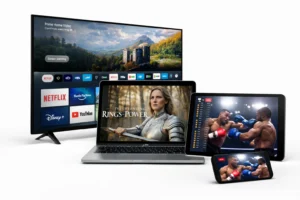
IPTV works on every screen in your house simultaneously:
- Smart TVs in the living room and bedroom
- Phones and tablets anywhere in the house
- Laptops for personal viewing
- Additional Firesticks at £40 each with no ongoing multi-room fees
A typical IPTV subscription includes 2–5 simultaneous connections, meaning every family member watches what they want on their own device.
6. Picture Quality
Both technologies deliver excellent picture quality in 2025.
Satellite: Sky Q and Sky Glass offer 4K HDR on select channels.
The satellite signal itself is stable and high-quality, with minimal compression artefacts during live sport.
IPTV: Quality depends on the provider’s server infrastructure and your internet speed. Premium IPTV providers deliver 1080p as standard and 4K on select channels. With a good connection (25+ Mbps), quality matches or exceeds satellite.
The verdict: Satellite offers marginally more consistent picture quality due to its dedicated signal path. IPTV with a wired Ethernet connection and adequate broadband comes extremely close. For most viewers, the difference is imperceptible.
7.
On-Demand Content
Sky’s on-demand library through Sky Q and Sky Glass includes Sky originals, box sets, and some third-party content. It is good but limited compared to dedicated streaming platforms.
IPTV providers typically include massive VOD libraries with thousands of movies and complete TV series. Combined with catch-up TV (rewind any channel up to 72 hours), the on-demand experience comprehensively exceeds satellite’s offering at no additional cost.
8. Portability
Satellite television stays at home. The dish and set-top box are permanent fixtures. If you travel, visit family, or stay in a hotel, your satellite subscription is useless.
IPTV travels with you. Install the app on your phone, connect to Wi-Fi, and stream from anywhere.
Travelling abroad? Use a VPN connected to a UK server and watch everything as normal. This portability makes IPTV especially valuable for frequent travellers and commuters.
Frequently Asked Questions: Iptv vs satellite tv
### Is IPTV better than satellite TV?
For most UK households with adequate broadband (25+ Mbps), IPTV is better value. It costs less, offers more channels, requires no dish or installation, and works on multiple devices. Satellite’s only advantages are weather-independent reliability and slightly more consistent picture quality.
### Can IPTV replace my Sky subscription?
Yes. A quality IPTV provider includes all Sky Sports, Sky Cinema, and Sky entertainment channels at roughly one-tenth of the monthly cost. Test with a free trial before cancelling your Sky contract.
### Does IPTV need a satellite dish?
No. IPTV uses your broadband internet connection to deliver content.
No dish, no cables, and no engineer visit required. You only need a streaming device and an active internet connection.
### What happens to my satellite TV in bad weather?
Heavy rain, snow, and strong winds can degrade or completely interrupt satellite signals. This is known as rain fade. IPTV is completely unaffected by weather because it uses your indoor internet connection.
### Which is more reliable: IPTV or satellite?
Both have trade-offs. Satellite is affected by weather but independent of internet.
IPTV is weather-proof but dependent on your broadband connection. For UK homes with stable broadband, IPTV reliability meets or exceeds satellite for daily use.
For more information on internet streaming technology, visit the Ofcom Connected Nations Report.
Conclusion: Internet Beats the Dish: Iptv vs satellite tv
The IPTV vs satellite TV comparison in 2025 decisively favours IPTV for cost-conscious UK viewers. Lower prices, vastly more channels, no contracts, multi-device flexibility, and total portability make it the modern choice.
Satellite television still has a place for viewers in areas with poor broadband or those who prioritise absolute signal consistency during extreme weather. But for the vast majority of UK households, an IPTV subscription delivers a better experience at a dramatically lower price.
Ready to make the move? Start with a free trial and experience the difference for yourself.